
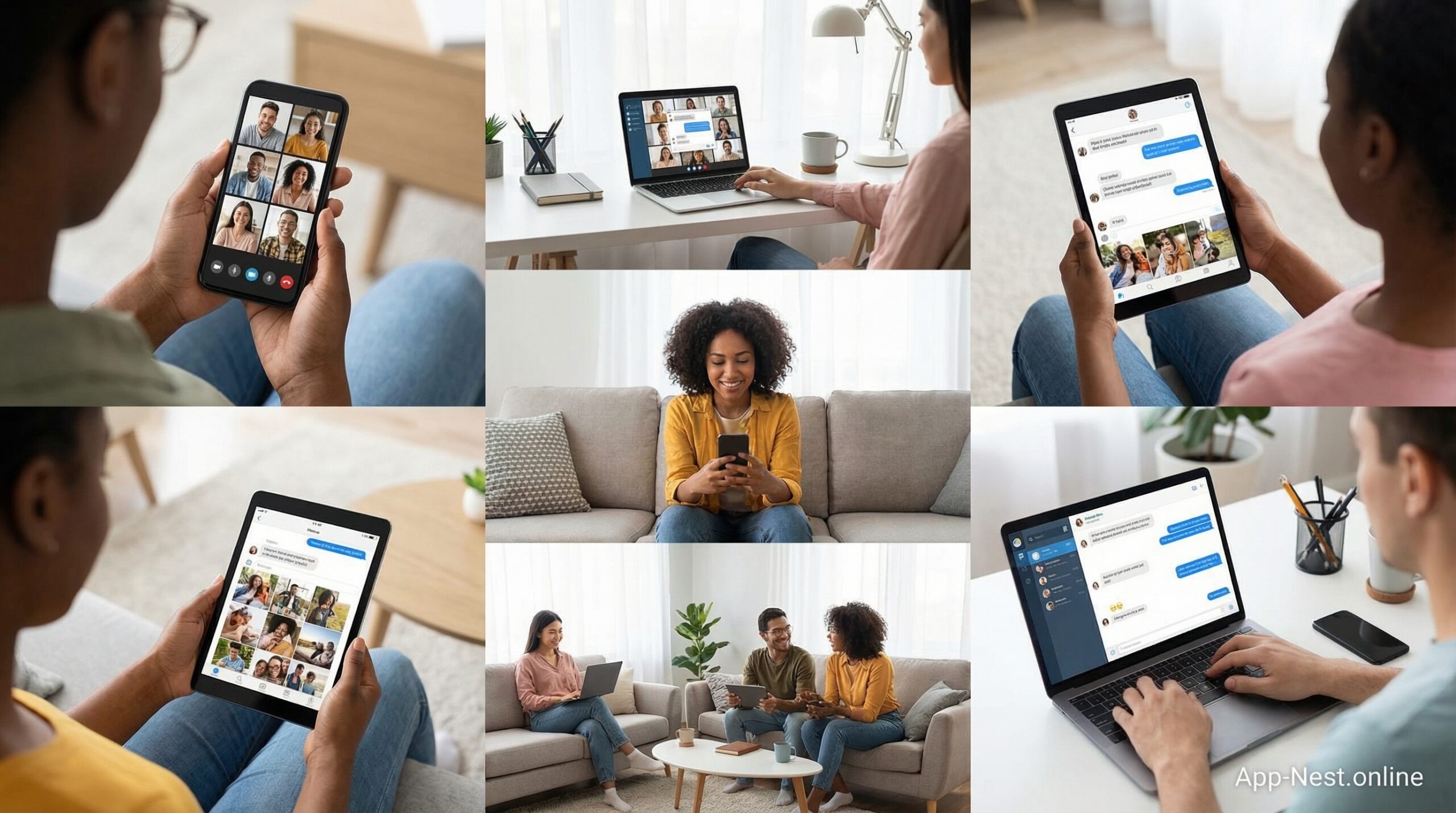
Social and communication apps have become part of everyday digital activity. People use these apps to send messages, share information, communicate with groups, and maintain personal and professional connections. Online messaging and digital interaction now rely heavily on mobile and web-based communication platforms.
This article explains social and communication apps used for online messaging and digital interaction, how they work, how users rely on them, and how they support communication in daily life.
What Are Social and Communication Apps
Social and communication apps are digital platforms designed to help users interact with others through messages, calls, shared content, and group conversations. These apps allow communication between individuals, groups, and communities through internet-based systems.
Users access social and communication apps through smartphones, tablets, or computers. These apps support text messaging, media sharing, voice calls, and digital interaction across locations.
Role of Online Messaging in Digital Communication
Online messaging allows users to communicate without physical presence. Messages are sent and received instantly through digital networks. Social and communication apps replace traditional communication methods by offering digital messaging systems.
Online messaging supports conversations between friends, families, colleagues, and communities. Messages remain stored for reference and follow-up.
Role of Digital Interaction in Social Platforms
Digital interaction includes activities such as messaging, commenting, sharing content, and participating in group discussions. Social apps support digital interaction by connecting users through shared platforms.
Users interact through direct messages, group chats, and public conversations. Digital interaction supports information exchange and relationship maintenance.
Types of Social and Communication Apps
Social and communication apps can be grouped based on communication purpose and interaction style.
Messaging Apps
Messaging apps focus on text-based communication. Users send messages, images, and files. Messaging apps support one-to-one and group conversations.
Social Networking Apps
Social networking apps help users connect through profiles and shared content. Users interact through posts, comments, and messages.
Voice and Video Communication Apps
Voice and video apps support calls through digital networks. Users communicate through audio and video instead of text.
Group Communication Apps
Group communication apps support conversations among multiple users. These apps are used for families, communities, and work teams.
Community Interaction Apps
Community apps support discussion forums and interest-based groups. Users interact through topics and shared conversations.
Workplace Communication Apps
Workplace communication apps support professional interaction. Users communicate with teams through messaging and shared channels.
How Social and Communication Apps Work
Social and communication apps work through internet-based systems.
Users create accounts and connect with other users. Messages and media are transmitted through servers. Apps store communication data and display it in conversation interfaces.
Notifications alert users about new messages or interactions. Digital systems manage message delivery and interaction flow.
How Individuals Use Social and Communication Apps
Individuals use social and communication apps for daily interaction.
Personal Messaging
Users send messages to family and friends. Personal communication continues through digital platforms.
Group Conversations
Users participate in group chats for events, planning, or discussions. Group messaging supports coordination.
Content Sharing
Users share images, videos, and links. Content sharing supports interaction beyond text messages.
Voice and Video Calls
Users make calls through apps instead of traditional phone services. Calls support real-time communication.
Community Participation
Users join communities and discussion groups. Social apps support interaction around shared interests.
How Businesses and Professionals Use Communication Apps
Businesses and professionals rely on communication apps for work-related interaction.
Team Communication
Teams communicate through group chats and channels. Messages support coordination and updates.
Remote Collaboration
Remote teams use communication apps to stay connected. Digital interaction replaces in-person meetings.
Client Communication
Businesses communicate with clients through messaging platforms. Communication records remain available.
Information Sharing
Documents and files are shared through communication apps. Teams exchange information digitally.
Benefits of Social and Communication Apps for Online Messaging
Social and communication apps support online messaging in several ways.
Continuous Communication
Users communicate without time or location limits. Messages are delivered through digital systems.
Centralized Conversations
Apps store conversations in one place. Users access message history easily.
Multi-User Interaction
Group messaging supports interaction among multiple users. Communication becomes organized.
Media Sharing
Users share media files through messaging apps. Interaction extends beyond text.
Digital Presence
Users maintain social connections through digital interaction. Communication continues even when physical meetings are not possible.
Benefits of Social and Communication Apps for Digital Interaction
Digital interaction is supported through social platforms.
Community Engagement
Users participate in digital communities. Interaction happens through shared content and messages.
Information Exchange
Social apps support sharing information and updates. Users stay informed.
Relationship Maintenance
Users maintain relationships through digital communication. Interaction supports connection.
Accessibility
Users access communication platforms through mobile devices. Digital interaction remains available.
Challenges of Social and Communication Apps
Social and communication apps also face challenges.
Internet access is required for communication. Message overload may affect user focus. Privacy concerns arise when sharing personal information.
Users must manage notification settings. Digital interaction requires responsible usage.
Privacy and Security in Communication Apps
Privacy and security are important in digital communication.
Communication apps use authentication methods to protect accounts. Messages may be encrypted during transmission. Users control privacy settings within apps.
Users should manage contact lists and sharing permissions to protect communication data.
Choosing Social and Communication Apps for Online Messaging
Selecting a social or communication app depends on usage needs.
Users should consider:
Messaging features
Group communication support
Voice and video options
Privacy controls
Device compatibility
Businesses should consider collaboration features and data management.
Social and Communication Apps for Different User Groups
Social and communication apps support various user groups.
Students
Students use communication apps for peer interaction and study groups. Messaging supports coordination.
Families
Families use social apps to stay connected. Group chats support daily communication.
Professionals
Professionals use communication apps for work interaction. Digital messaging supports coordination.
Communities
Communities use social apps for group discussions. Interaction supports shared interests.
Role of Social Apps in Digital Culture
Social apps influence digital culture.
Online messaging shapes how people communicate. Digital interaction becomes part of social behavior.
Social platforms support information sharing and public conversations.
Social and Communication Apps and Remote Interaction
Remote interaction relies on digital platforms.
Communication apps connect users across locations. Online messaging supports remote relationships and work.
Digital interaction replaces physical meetings in many situations.
Impact of Social and Communication Apps on Communication Habits
Communication habits have changed with digital platforms.
Users rely on messaging instead of calls. Conversations become asynchronous.
Social apps influence how information is shared and received.
Future of Social and Communication Apps
Social and communication apps will continue to support online messaging and digital interaction.
Digital communication platforms will remain part of daily life. Users will continue using apps to connect and interact.
Communication apps will adapt to changing digital communication needs.
Conclusion
Social and communication apps support online messaging and digital interaction through internet-based platforms. These apps allow users to send messages, share content, and communicate through digital systems.
Individuals use social apps for personal and group communication. Professionals and businesses rely on communication apps for coordination and collaboration. Social and communication apps support digital interaction across locations and communities.
As digital communication continues to grow, social and communication apps will remain an important part of how people connect and interact online.